
Spring 2024 Wine Club
The six club wines are detailed below. It’s Spring… and thus the Wine Club’s first rosé! Not only that, but one of Portugal’s finest white wines is also included. We have wines to enjoy from Vinho Verde wine region, as well as Douro Valley, Dão, and the Bairrada.
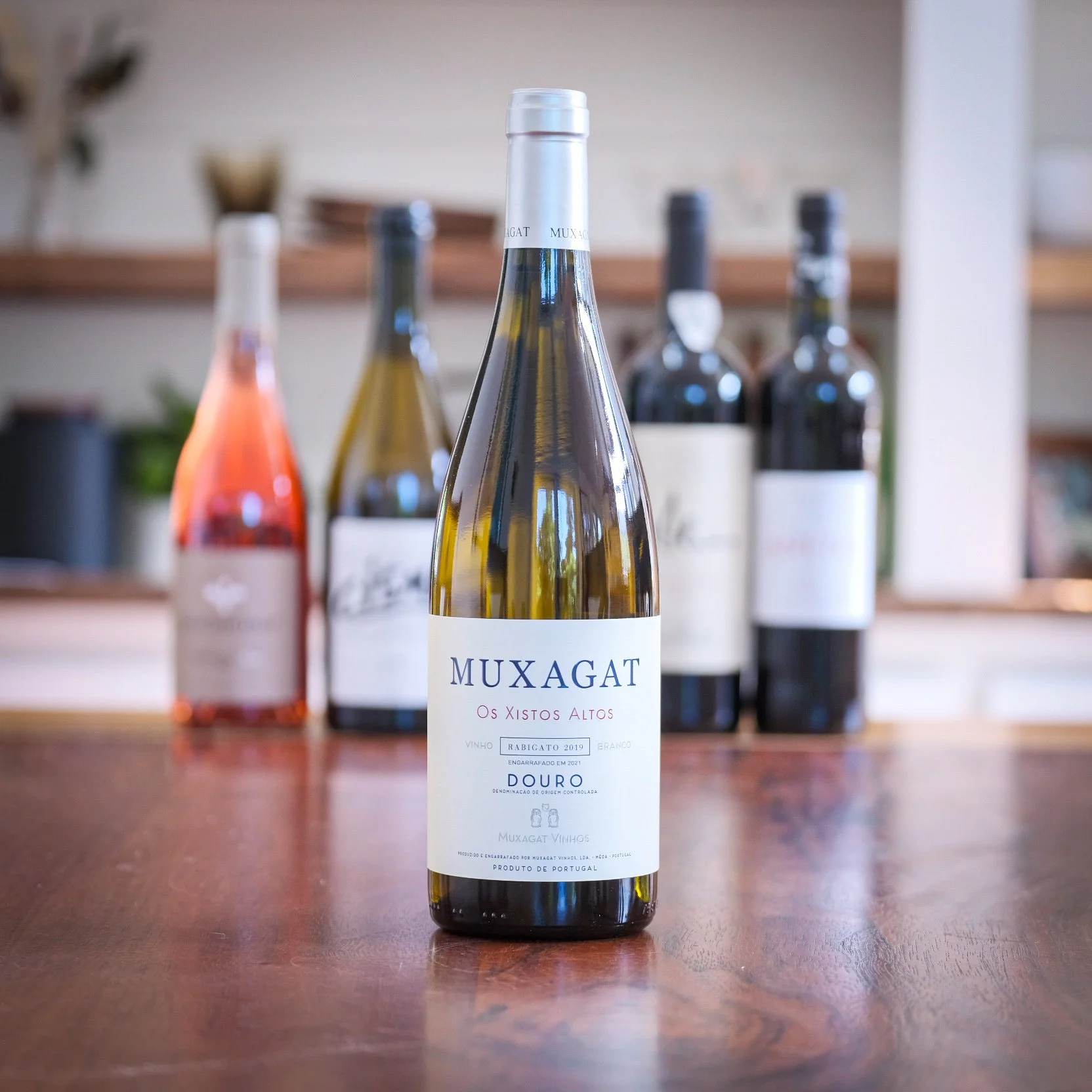
2019 Muxagat Os Xistos Altos
Long-time Wine Club Members know and love Muxagat. As do it. Proprietor Sunsan Lopes was my very first import partner. And this particular wine, Os Xistos Altos, is one of the wines from Portugal I initially fell in love with. Muxagat (pronounced Moo-sha-got) is located in the tiny village of Mêda almost three hours drive from Porto at the eastern end of the Douro Valley. The Douro is divided into three regions and you can refer to this wine map for orientation. The Baixo Corgo is the western-most part of the Douro, closest to Porto and the influences of the Atlantic Ocean. Cima Corgo is the middle section. The most rugged, least developed region is the Douro Superior with parts of it closer to Spain than to Porto and the coast. The region is sought after for its high elevation vineyards, extremes in diurnal versus nocturnal temperature, and situational position to ripen grapes and produce beautiful wines. Muxagat has been making wines here since 2002.
Muxagat is a family-owned property, with Susana running the day-to-day operations and her husband, Maike, tending the vineyards. Susana is hyper-focused on driving awareness of artisan, terroir-focused Douro Valley wines forward through her work. Several of the wines are now only available on allocation, though luckily, I’ll always be able to secure the wines of my choice for our Wine Club. Winemaking is overseen by the legendary, Luis Seabra, widely regarded as the best winemaker in the Douro and one of the most influential wine professionals in Portugal.
Os Xistos Altos (pronounced osh-shishtoosh-altush) is Portuguese for “the highest schist), referring to the altitude of the vineyard and the soil in which the vines are rooted. Douro Superior generally has higher elevation vineyards than the rest of Douro, but this particular vineyard plot of 100% Rabigato is above 720 meters. That’s one of the highest planted points in Portugal. That elevation helps combat the naturally hot summer days and lengthens the growing cycle, creating fully mature yet complex grape characteristics. Rabigato is the go-to, workhorse white grape for high-quality white wines in Douro Valley.
All farming is organic and harvest is by hand. The grapes are brought to the winery and pressed in an old-school hand press with juice running in equal parts to 350-L used oak barrel, large oak format foudre, and cement egg. Fermentation is naturally by native yeast only, and then the wine ages in the same fermentation vessels on the lees (dead yeast cells) for 18 months before bottling. 2019 is a perfect vintage of this wine to drink now. Time in bottle is magic for this wine… enjoy one of Portugal’s treasures!
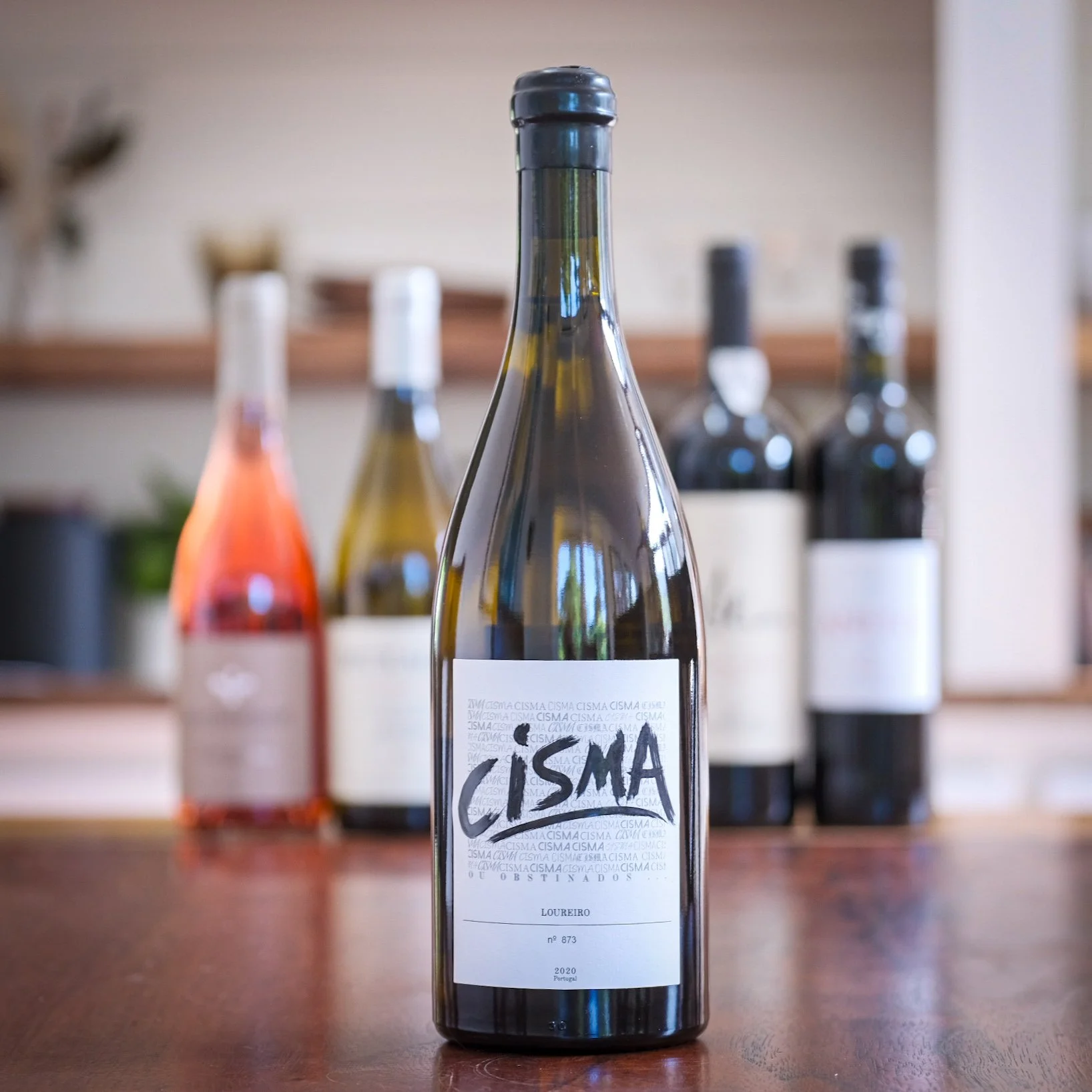
2020 Quinta de Santiago Cisma Loureiro
Here comes a fun (yet serious quality) wine from two of my absolute favorite people in Portugal…. Joana Santiago and Pedro Coelho. Joana is the 4th generation proprietor of Quinta de Santiago along Portugal’s northern border with Spain in the Vinho Verde region. Club Members have enjoyed several wines from Santiago. Pedro is the owner and winemaker of Pormenor in the Douro Valley… another rockstar stalwart in Club shipments. Cisma is a joint-venture these two awesome wine pros decided to tackle together for their mutual love of the Loureiro varietal and their friendship!
Along the northern border of Portugal and Spain, Quinta de Santiago is uniquely positioned to benefit from a microclimate ideal for growing Alvarinho but also another grape native to the region, Loureiro. The particular orientation of the Quinta (farm) shelters the vineyards from significant Atlantic influences but preserves thermal amplitudes ideal for ripening indigenous varietals. Soil is predominantly clay given the the proximity to the Minho River and viticulture follows organic practices.
Joana and Pedro share a common goal of advancing artisan Portuguese wines globally by letting the land and terroir do the talking… minimal human intervention. This is what makes their work special and why I love working with them. They are humble servants of Mother Nature.
2020 Cisma is 100% Loureiro grown on the Quinta de Santiago estate. After hand harvesting, the grapes are pressed and the juice decants naturally at low temperatures. 50% of the juice ferments in stainless steel vat and the other 50% in used French oak 500-liter barrels. The wine ages 9 months in the same vats used for fermentation, which shows an entirely different side of the Loureiro varietal than typical of this region. Loureiro is naturally fruity and exuberant, and Joana and Pedro wanted to showcase its “serious side”. The wine is incredibly approachable, so drink without food but it will also work with most lighter dishes. Perfect for the summer months ahead!
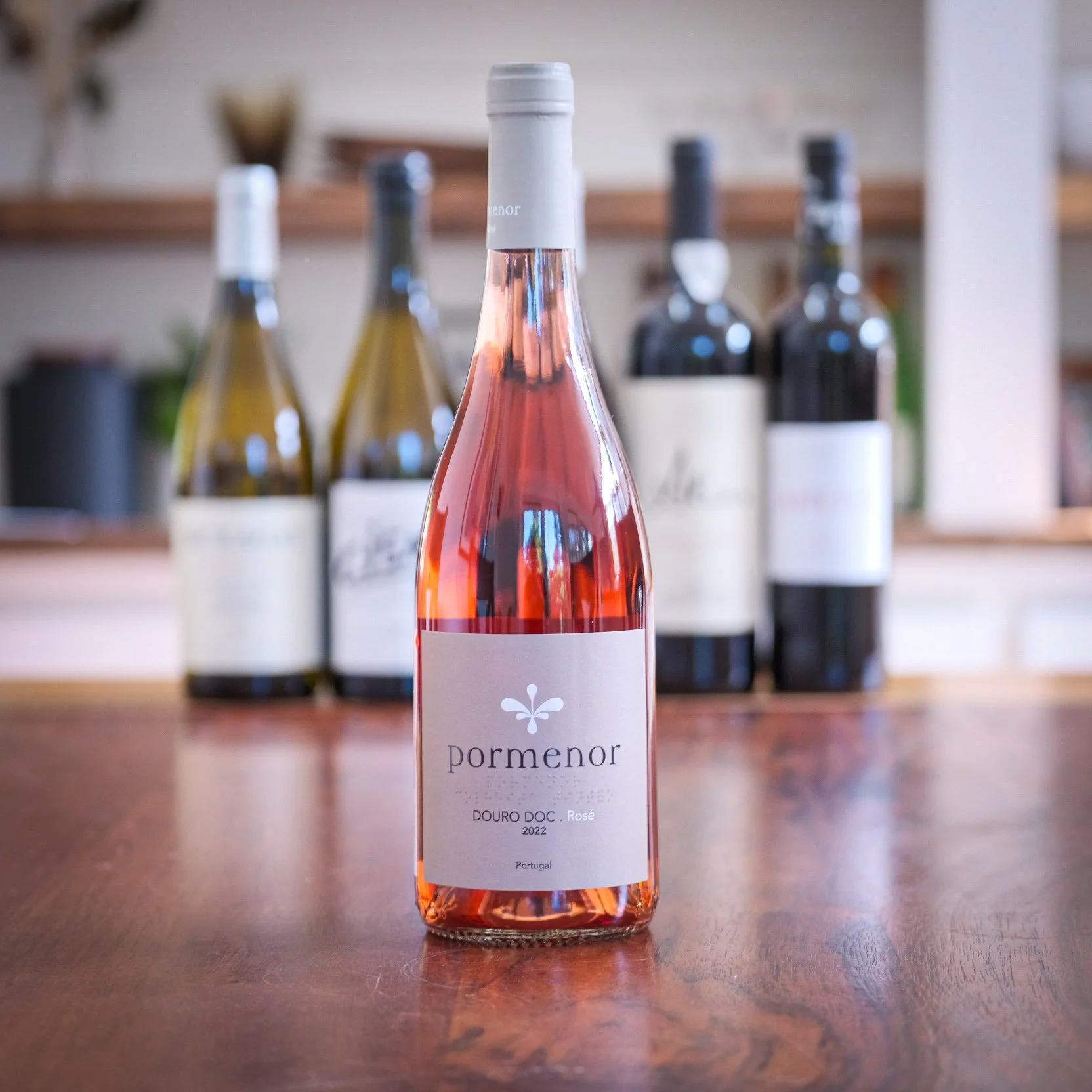
2022 Pormenor Rosé
Pedro is one half of the team behind Cisma, but his full-time love is Pormenor in the Douro Valley. Pormenor means “details” in Portuguese, and Pedro is all about the details of what makes great wines. He began in 2013 after working at Niepoort, but considers his first professional vintage to be the 2017 harvest when he had finally secured what he considers professional conditions in his own winery. Pedro is one of my original partners, and he is also one of the best people you can know. I love supporting his work. I’m a self-proclaimed rosé nut… I love drinking pink year-round! And what better inaugural rosé than Pormenor, a true delight!
Pedro jokes that he makes rosé because I ask for it, and that the grapes he uses are far too good for “only rosé”. These grapes are 40+ years of vine age, at high altitude, pristine vineyards in the Douro, and they would otherwise be used for high-quality red table wine. But, we are lucky he peels some off of the Tinto train to deliver us what I consider to be Portugal’s premier premium rosé.
All of Pedro’s farming is organic. He harvests by hand with local farmers working the plots and grapes are sorted through a conveyor system at the winery. I work the conveyor sorting table every harvest with my son Owen! Touriga Franca and Tinta Barroca are the two red varietals used, and they are gently pressed after sorting, decanted for 24 hours and ferment with native yeast in stainless steel tank. The wine ages in the same tank on the lees without stirring until bottling.
Old vines give this wine structure, so you can eat this with food if you prefer. I pop and pour with or without food as the fruit profile is incredible pleasant to enjoy, along with good natural acidity. I purposefully like rosé from great grapes a year or two in the bottle. This will last five, yes 5 years and age nicely.
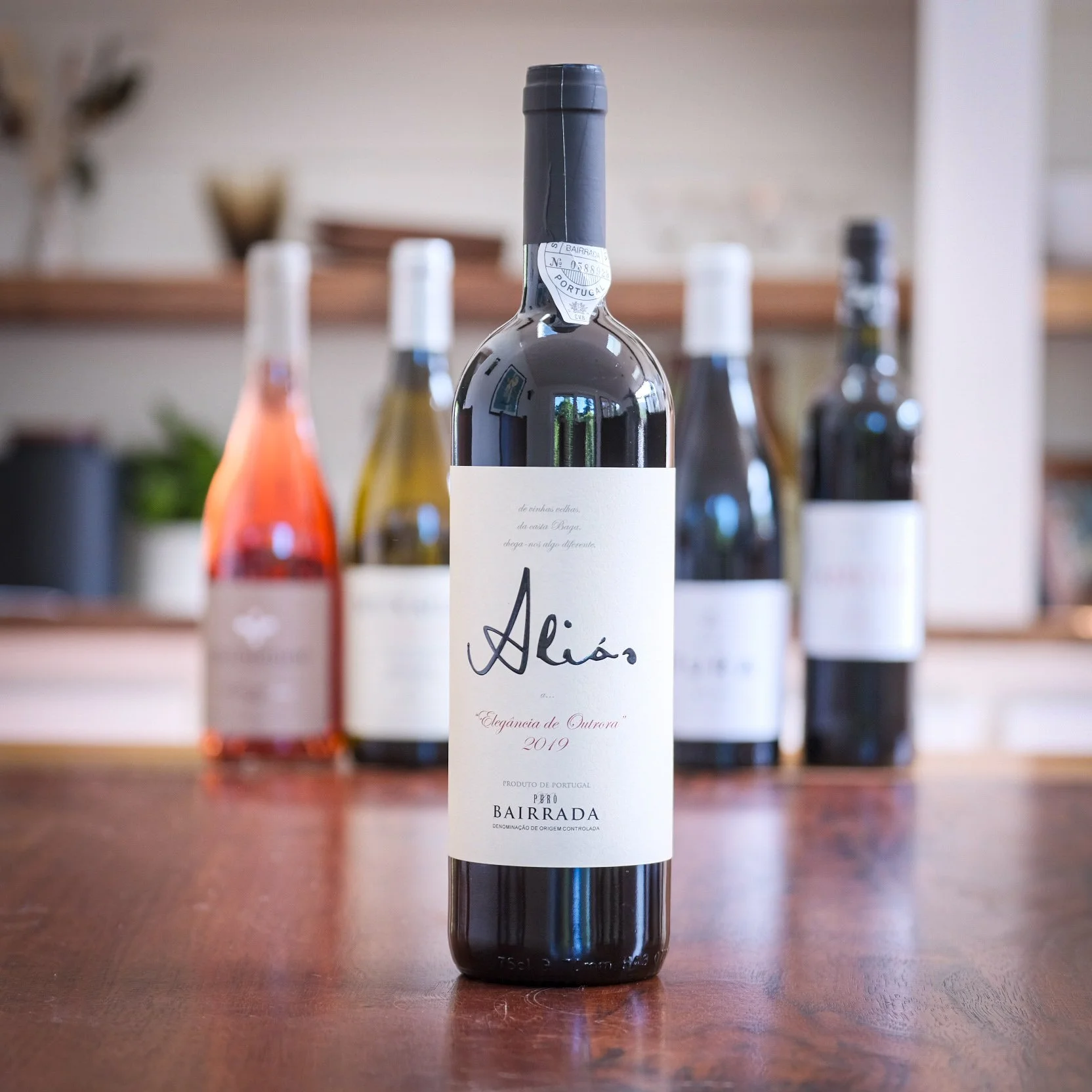
2019 V Puro Aliás Tinto
V Puro is Bairrada wine region passion project of two lifelong friends, Nuno Mira do Ó and João Soares. Bairrada is Baga country, and these two friends are serious about old vine, original genetic material Baga. Checking out Bairrada on the wine map shows it immediately next to the Atlantic Ocean, an important feature in the climate of the region. Summer brings hot days but cool, sometimes cold nights and the big temperature swings combined with the clay soils make the Bairrada an exciting region for artisan winemakers like Nuno.
The wine is 100% Baga and from a specific parcel of the Aliás vineyard that is entirely 100+ year old vines… a rare and special treat! Given the micro sized parcel of vines and the small yield of old vines, there is precious little of this annually - usually only 2,000 bottles of each vintage.
2019 was dry and quite hot during winter and spring. The summer brought lower temperatures than usual, allowing the vines to regain some of their balance and leading to the production of a wine with natural freshness. These grapes where picked in mid September and the result is a complex wine full of elegance and spicy character. Nuno and João used partial stems in fermenting the 2019 in an open lagar, a traditional vessel in Portugal which is a large stone tank. Fermenation finished in used French oak barrels where it aged for 12 months before bottling in September 2020.
This is unique wine - the type of genetic material that is very rare in Portugal for the Baga variety. In the mouth it is very fresh, with silky tannins, salty sensations (remember the proximity to the Atlantic Ocean), spicy notes and an amazing acidity that transports the wine through a long finish. This wine can be enjoyed now but also has tremendous, multi-decade aging potential.
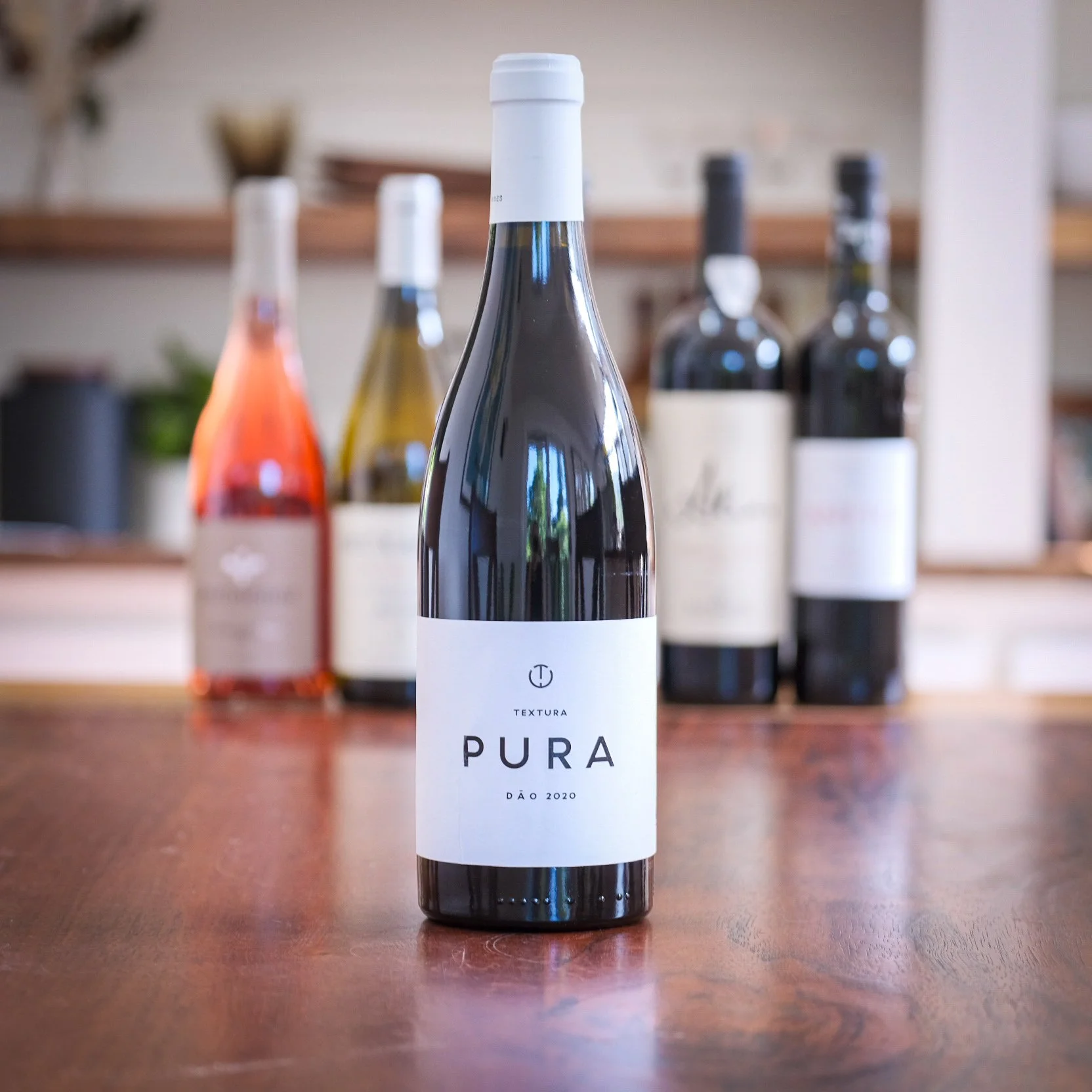
2020 Textura Pura
I’ve been working with Textura since their launch, and “Pura” is their top tier wine. The entire range of Textura wines has gained international acclaim as the rise of artisan Portuguese wines marches forward the past few years. Their quality is undeniable. Textura is the Portuguese word for “texture”. This naming is purposeful as the winery’s founder and owner, Marcelo Araujo wants his wines to be about their textures and feel and importantly how it makes us feel to drink them. Textura vineyards and winery are in the Dão region (wine map) about 90 minutes drive outside of Porto. Touring the fields and looking through the the beautiful, organically farmed vines toward the Serra da Estrela mountain range is a worthy trip to make. The Dão has one of Portugal’s most attractive combinations of climate and geographic features offering optimal grape growing conditions, and Marcelo and his family made significant investments in understanding their land and building their winery (fit into the original location of a textile factory) to properly allow for organic farming and the vinification of their parcels separately. By doing so, their wines best reflect their place of origin.
Winemaking is directed by Mariana Salvardor, assisted by the legendary, Luis Seabra. Pura is the Portuguese word for “pure”. 2020 Pura Tinto is sourced from a 55-year old vineyard outside of the village of Vila Nova de Tazem. The vineyard sits at 1,800 feet of elevation and is organically farmed, like all of Textura’s vineyards. The soil is granite and the grapes in the blend are Jaen, Baga, Alfrocheiro, Tinta Cão, and Tinta Pinheira. The fruit was hand-harvested and grapes fermented naturally with native yeasts and aged in French oak vats, with 40% whole bunch clusters included in the first 30 days. The wine then spent 16 months in 225-liter used French oak barrels and large format used oak foudre and was naturally stabilized before bottling. This is pristine red wine and a great example of the quality happening today in Portugal.
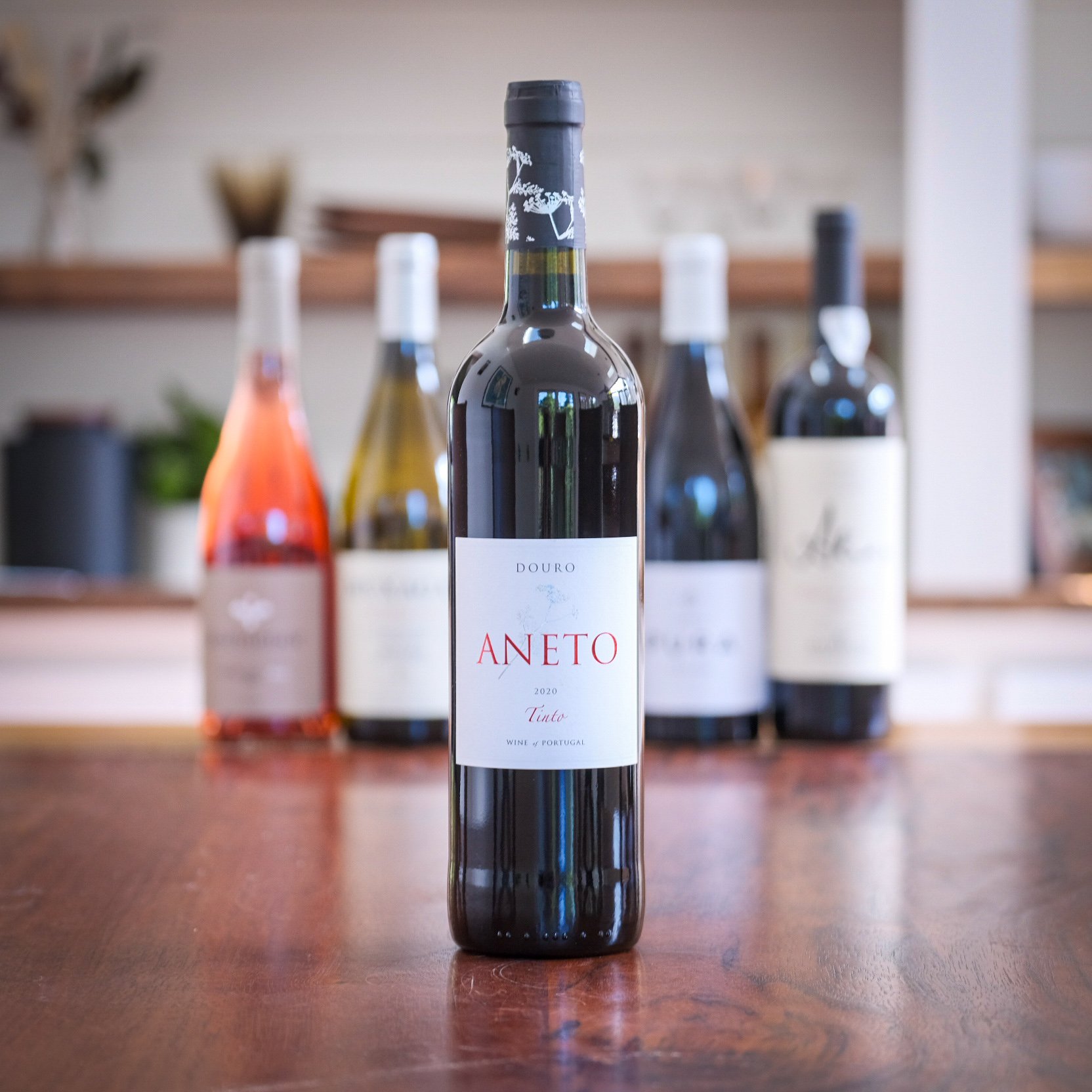
2020 Aneto Tinto
Francisco Montenegro started Aneto Wines in 2001 on land his family has owned for multiple generations. He farms 17 hectares though only a small portion of grapes grown are used in Aneto Wines. Grapes used for Aneto are from vineyards with age range between 27 and 82 years and span three farms across both the Baixo and Cima Corgo sub-regions of the Douro Valley, which provides a great interpretation of the heart of the Valley (wine map). I met Francisco at a tasting he hosted at the Six Senses Resort and Spa in the Douro. It was my first trip to the Douro Valley and before I had ever considered importing wine.
Francisco is dedicated to sustainable farming practices to ensure the long-term health of his land. No synthetic products are used in the vineyards or the winery. Francisco directs all aspects of the family’s wine business, and their aim is to remain a small, artisan producer dedicated to reflecting their land and the Douro.
2020 Aneto is a blend of Tinto Touriga Franca, Touriga Nacional Tinta Roriz, and Tinto Cão grown in schist soil, the dominant soil type of the Douro Valley. Grapes are harvested manually before pressing at the winery and settle in open stainless steel tank where fermentation occurs using only indigenous yeast. The wine is aged for one year in used French oak barrels before bottling. To me this is “new classic” Douro red… it is fresh, well integrated, has oak but soft oak notes and not overpowering. The fruit is present but nicely balanced. I find myself drinking this wine regularly as a “house red” in the most enjoyable way. It pairs well with a wide range of foods and with 5 years of bottle age, it pairs with seafood (especially grilled seafood).